

Home>Electrical Installation Service>Electrical Panel Upgrades & Meter Base Replacements
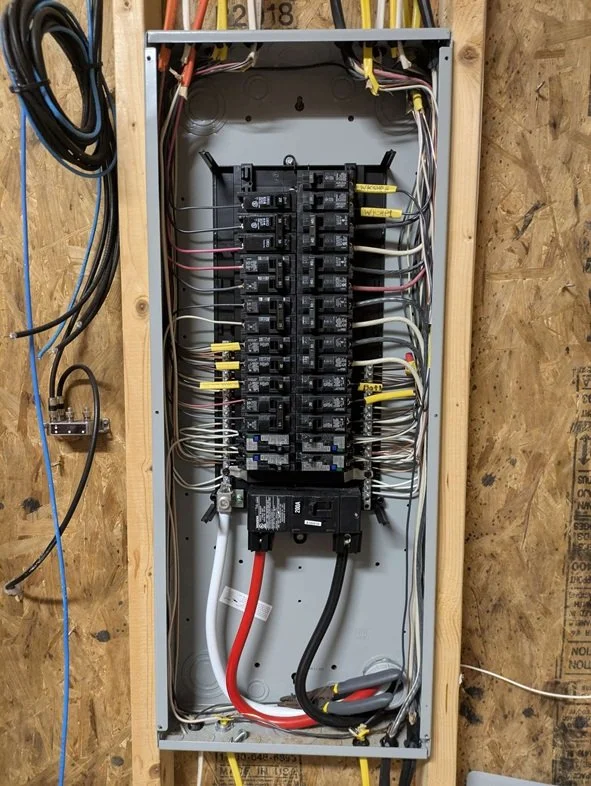
High-Value Electrical Panel Upgrades & Smart Panels
Modern homes require more power than ever. If you are adding an electric vehicle charging station, a standby generator, or undertaking a residential renovation, your outdated panel may be a fire hazard. We specialize in high-ROI panel replacements that future-proof your home.
Smart Electrical Panels: As a premier home automation company, we install cutting-edge smart panels that allow you to monitor your energy consumption in real-time, control individual circuits remotely via your smartphone, and optimize power routing for backup generators or solar integration.
Our Panel Upgrade Process:
Engineering-Grade Load Calculations: Backed by an Electrical Engineering degree and 25 years of experience, we calculate your precise electrical load to guarantee safety and efficiency.
Corrosion-Resistant Installations: Coastal environments like Holden Beach, Wrightsville Beach, and Figure Eight Island require specialized, weather-resistant materials to prevent salt air corrosion.
Code-Compliant Safety: Every installation includes proper grounding, bonding, and whole-house surge protection to safeguard your property from coastal lightning strikes and grid fluctuations.
Electrical Panel Upgrades & Meter Base Replacements in Coastal NC
WaveRider Electric & Automation provides expert electrical panel upgrades, smart electrical panels, and emergency meter base, pan, and socket replacements for residential and commercial properties. We perform these essential electrical installation services throughout Bolivia, Southport, Oak Island, Wilmington, and all surrounding communities within Brunswick and New Hanover Counties. Whether you are upgrading your home's capacity for an EV charger, integrating a smart home automation system, or responding to a utility compliance letter from BEMC or Duke Energy, our engineering-grade solutions ensure your power is safe, reliable, and up to code
Urgent BEMC & Duke Energy Meter Base Replacements
Are you receiving letters from Brunswick Electric Membership Corporation (BEMC) or Duke Energy requiring you to update or replace your meter base? You are not alone. Utility companies are actively auditing coastal properties and requiring immediate replacement of aging, non-compliant, or flood-risk meter pans and sockets.
As a licensed Master Electrician based in Bolivia, NC, Jason Wagner and the team at WaveRider Electric can rapidly resolve these utility compliance issues. We handle:
200A and 320A single-phase and three-phase self-contained meter base upgrades.
Complete meter pan and socket replacements due to salt air corrosion or weather damage.
Coordination directly with BEMC and Duke Energy to handle the disconnect, permit inspections, and safe reconnection.
Ready to Upgrade or Need a Fast Meter Base Replacement?
Stop relying on band-aid fixes or ignoring utility warning letters. Trust a local, master electrician, engineer, and problem solver with a natural talent for troubleshooting.
Call Us: 910-539-5100
License: 33265 (Fully insured with $2 million liability)
Our Coastal NC Service Areas:
Brunswick Islands & Beaches: Oak Island, Holden Beach, Ocean Isle Beach, Sunset Beach, Caswell Beach.
Southport & Surrounding: Southport, St. James, Bolivia, Boiling Spring Lakes.
Wilmington Metro: Wilmington, Leland, New Hanover County.
Pleasure Island & Beyond: Carolina Beach, Kure Beach, Wrightsville Beach, Figure Eight Island.
South Brunswick & Border: Shallotte, Calabash, North Myrtle Beach, Briarcliffe Acres.
Common Questions/ FAQs
-
In North Carolina, the utility company (like BEMC or Duke Energy) owns the actual glass meter, but the property owner owns the meter base, pan, and weatherhead. If your meter base is rusted, damaged by coastal salt air, or deemed non-compliant during a utility audit, the homeowner is required to hire a licensed electrician to replace it.
-
Most residential panel upgrades or meter base replacements can be completed in a single day. At WaveRider Electric & Automation, we coordinate directly with your utility provider (BEMC or Duke Energy) to schedule the disconnect and reconnect, minimizing your downtime and ensuring your power is restored safely and promptly.
-
While not strictly required, upgrading to a smart electrical panel when installing an EV charging station is highly recommended. A smart panel allows you to monitor your real-time energy usage, schedule charging during off-peak hours, and safely manage your home's total electrical load so you never have to worry about tripping the main breaker or overloading your system.